Heat pump or boiler — which commercial heating system best suits your UK business?
Choosing between a commercial heat pump and a boiler is a strategic call for UK businesses. You need to weigh capital costs, operating costs, efficiency, and net‑zero goals — and this guide lays out the facts clearly. We explain how commercial heat pumps and boilers work, compare their operating economics, outline environmental and maintenance trade‑offs, and signpost grants and incentives that can reduce upfront spend.
You’ll find a direct comparison of air-source and ground-source heat pumps with modern condensing gas boilers, typical upfront and running cost drivers, and realistic lifecycle expectations for offices, warehouses, and production sites. Practical lists and concise tables make it easier for facilities managers and business owners to determine which system best meets their efficiency, carbon-reduction, and total-cost-of-ownership objectives.
What are commercial heat pumps and boilers?
Commercial heating systems provide large‑scale space heating — and sometimes cooling — for non‑domestic buildings. Heat pumps upgrade heat from the air or ground and deliver it to the building using compressors and refrigerant circuits, offering a high coefficient of performance (COP) when paired with the right distribution system. Boilers produce heat by burning gas, oil or biomass and transfer that energy through a heat exchanger into the building’s water or steam network, giving high‑temperature outputs needed for some processes.
In short, heat pumps are usually best for lower‑temperature distribution (underfloor heating or large radiators), while boilers remain the go‑to for high-temperature or steam applications. That practical distinction guides typical site applications and installer choices.
System selection depends on building use, load profile and available space for plant and distribution upgrades. For real‑world surveys, installations and servicing, Neater Heat Ltd provides commercial heat pump and boiler work with MCS and Gas Safe credentials, and can assess site feasibility to help turn technical choices into a clear procurement plan.
What defines a commercial heat pump, and what are its types?
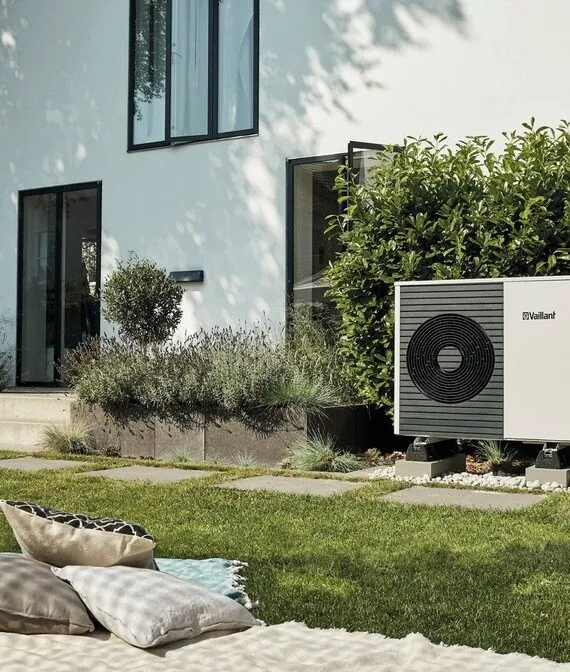
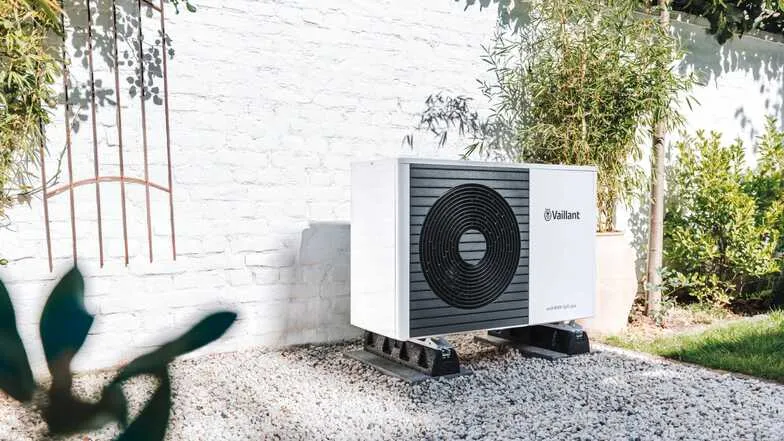
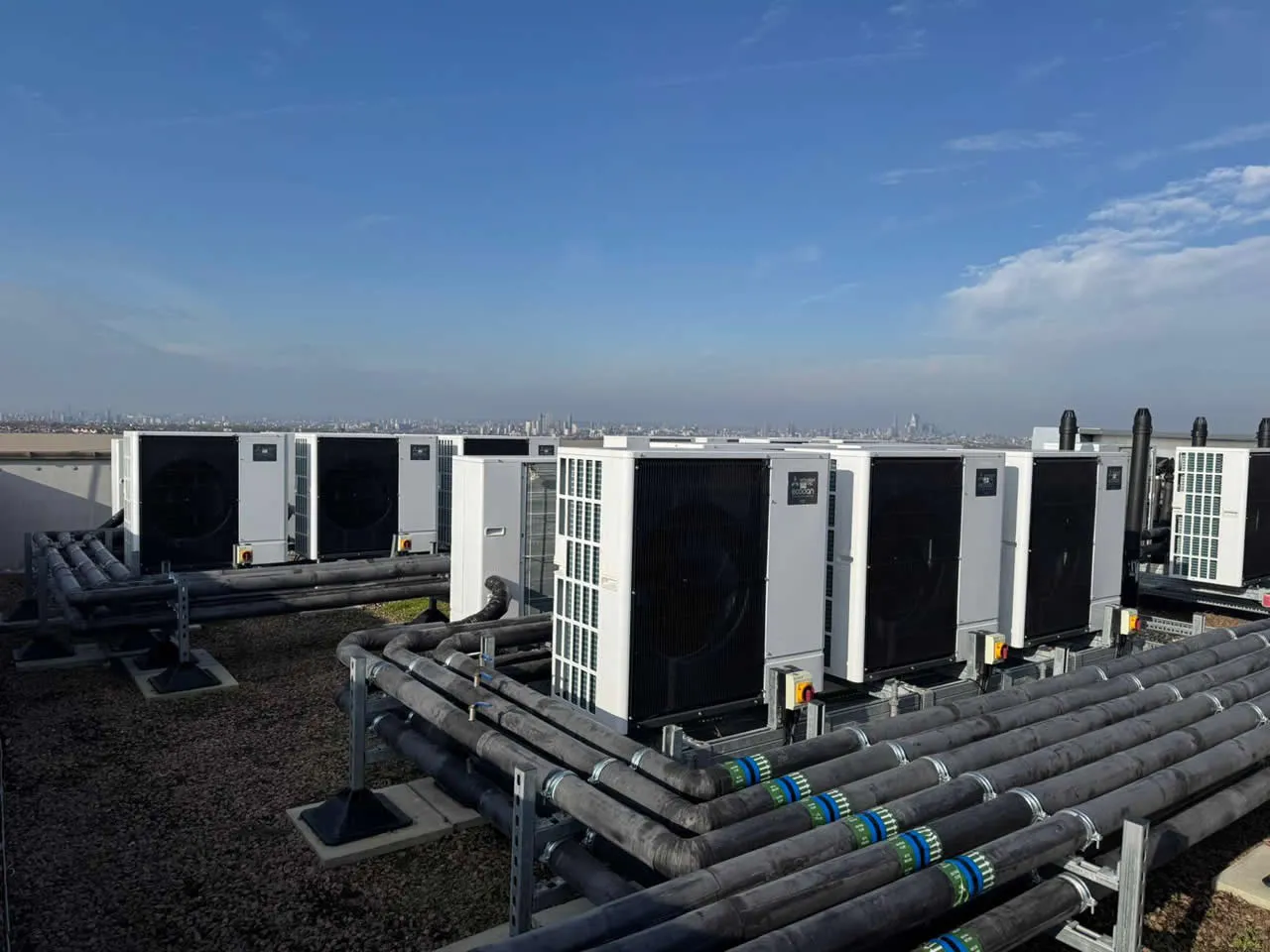
A commercial heat pump is a packaged unit that moves heat from the air or ground into a building, using a compressor, expansion valve, and evaporator/condenser stages to raise thermal energy to useful temperatures. Air Source Heat Pumps (ASHPs) use outdoor air and usually need less groundwork, making them a common retrofit choice for warehouses and retail units where external space and airflow are available.
Ground Source Heat Pumps (GSHPs) extract heat from buried loops and require more groundworks and space, but they often deliver higher and steadier COPs for large, continuous loads across campuses and industrial sites. Heat pumps can also provide cooling by reversing the cycle, which helps mixed‑use buildings — though performance depends heavily on distribution temperatures and control strategy.
Given this operational profile, businesses must consider plant footprint, acoustic planning for external units, and whether existing pipework and emitters will operate efficiently at lower flow temperatures. The next section compares these trade-offs directly with boiler alternatives in terms of cost and efficiency.
What are commercial boilers and their variants?

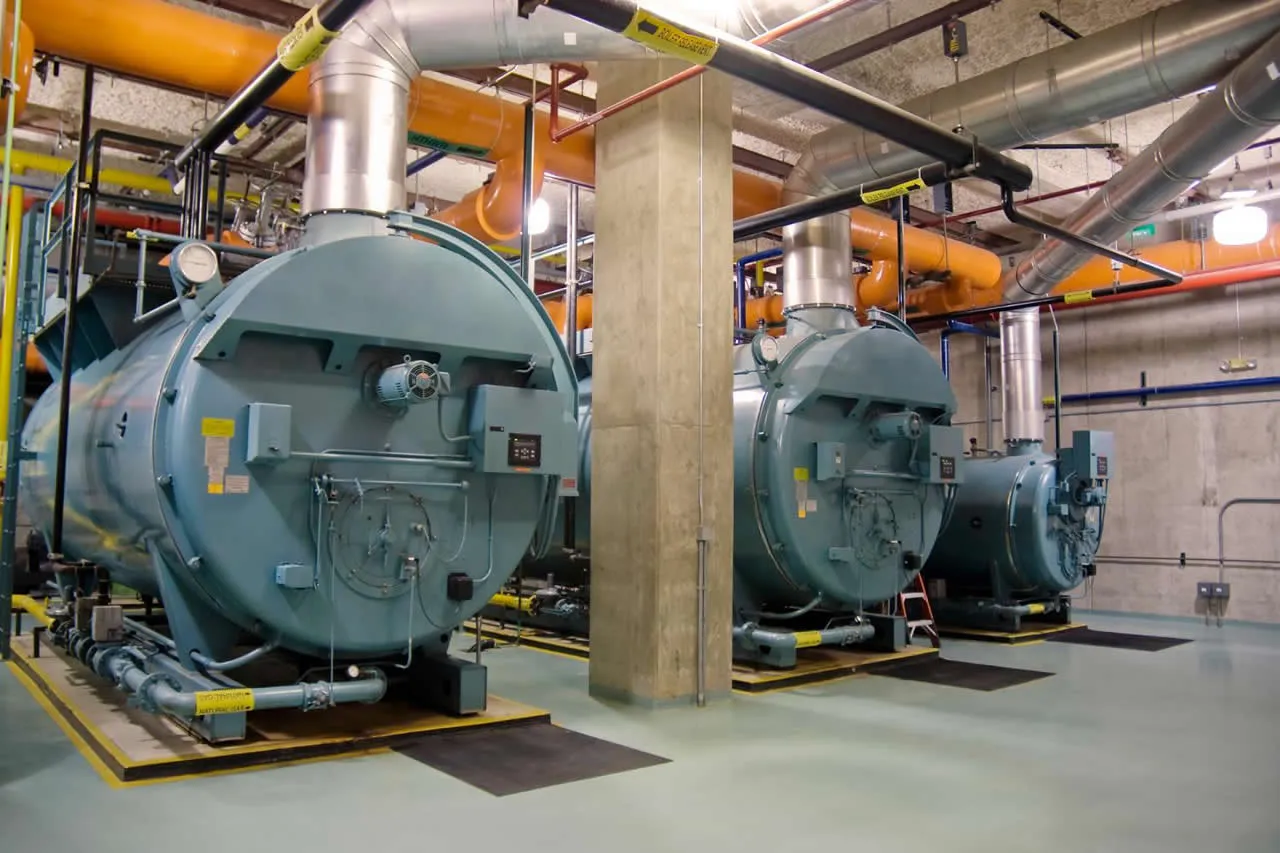
Commercial boilers generate heat by combusting fuel and transferring it to the building’s hot-water or steam system through a heat exchanger. Condensing gas boilers are the most common high‑efficiency option for non‑domestic buildings. Other variants include atmospheric and condensing-gas boilers, oil‑fired units when gas isn’t available, biomass boilers for specific low‑carbon strategies, and industrial steam boilers for process applications.
Choice depends on required temperatures, emissions goals and site constraints. Modern condensing boilers recover latent heat from exhaust gases to achieve high efficiency at suitable return temperatures, whereas steam systems follow different regulatory and maintenance regimes. Regulatory compliance and installer accreditations — for example, Gas Safe for gas appliances — are essential for safe, legal operation.
Selecting a boiler typically involves assessing fuel availability, distribution temperatures, and long‑term carbon strategy. The following section translates these technical differences into costs and efficiency outcomes.
Commercial Heat Pump vs Boiler: Which Is Best for UK Businesses?
Commercial choices depend on both capital cost and ongoing running cost. Heat pumps are described by COP/SCOP, and boilers by percentage thermal efficiency. Generally, heat pumps have higher installation costs but can deliver lower running costs and less carbon per kWh when electricity is low‑carbon or supplied on a favourable tariff.
A proper lifecycle comparison combines capital, maintenance, energy price forecasts and carbon targets; the table below summarises typical ranges and performance figures for common commercial systems to help with quick procurement planning.
| System | Typical commercial capacity range | Typical COP / efficiency | Typical upfront cost range | Expected lifespan |
|---|---|---|---|---|
| Air Source Heat Pump (ASHP) | 30 kW – 500 kW | COP 2.5–4.0 (seasonal variation) | Medium–High (site dependent) | 15–20 years |
| Ground Source Heat Pump (GSHP) | 50 kW – 1,000 kW | COP 3.0–5.0 (more stable) | High (groundworks required) | 20–25 years |
| Commercial condensing gas boiler | 50 kW – multiple MW | Efficiency 90–98% (condensing) | Low–Medium | 15–20 years |
The table shows GSHPs and ASHPs usually deliver more heat per unit of electrical input, while boilers often need less initial capital for comparable heat output. Next, we break down the main upfront cost drivers and how to budget accurately.
- Typical cost drivers for commercial installs include: Plant size and capacity — larger kW ratings drive higher equipment and distribution costs; Distribution upgrades — emitter and pipework replacement for low‑temperature systems increases spend; Site works and groundworks — GSHPs and any foundation works add significant capital.
These factors determine whether a hybrid system or staged replacement is the most cost‑effective route. A formal site survey is the recommended next step.
What are the upfront installation costs for commercial heat pumps vs. boilers?
Upfront installation costs vary widely by system size, groundworks and the need for distribution upgrades. ASHPs can cost more than a like‑for‑like boiler swap because they often require additional plant and larger emitters; GSHPs are typically the most expensive up front due to drilling or trenching. Boilers usually offer lower initial capital for direct replacements, but they may require future investment to meet decarbonisation targets. For accurate budgeting, businesses should commission a commercial site survey and a tailored quotation that captures building fabric, control upgrades and any civil works.
In a survey, ask for equipment capacity, emitter sizing requirements and whether hybrid systems or thermal stores are recommended. Neater Heat Ltd can conduct commercial site surveys and produce detailed quotations that show staged options where relevant, so you can compare actual capital commitments side‑by‑side.
How do running costs and energy efficiency differ between systems?
Running costs depend on COP or boiler efficiency and the relative prices of electricity and gas. A heat pump with COP 3.0 delivers roughly three units of heat for every unit of electricity; a 95% efficient boiler delivers 0.95 units of heat per unit of gas energy. If electricity attracts a premium, heat pump savings can be reduced unless you secure a specialist commercial electricity tariff or use on‑site renewables. Conversely, gas price volatility drives boiler operating cost risk.
For example, a medium office with 200 MWh annual heat demand could see lower net bills with a heat pump if COP and electricity prices are favourable versus gas at current market rates.
To reduce running costs, consider optimised controls, thermal stores, demand‑shifting and pairing systems with on‑site renewables such as solar PV. These measures require integrated project planning and careful tariff management to lock in long‑term savings.
- Ways businesses reduce running costs: Optimise controls and setpoint schedules to match occupancy; Use thermal stores or buffer tanks to smooth loads and improve COP; Negotiate specialist business electricity tariffs or combine with on‑site generation.
These approaches support ongoing cost reductions and help meet carbon targets.
What are the environmental and maintenance considerations?
Environmental impact and maintenance obligations shape long‑term suitability. Heat pumps can substantially lower operational carbon when powered by low‑carbon electricity, while boilers produce on‑site CO2 and may face tighter regulation as net‑zero policies advance.
Maintenance varies by technology: heat pumps require refrigerant and compressor checks, outdoor unit servicing, and distribution inspections; boilers require combustion testing, flue checks, and safety valve inspections. The choice of maintenance contract affects uptime and business continuity—preventive servicing reduces reactive repair costs and helps you stay compliant with safety regulations.
Lifecycle planning should include refrigerant management and end‑of‑life recovery for heat pumps, alongside fuel sourcing and potential future restrictions on fossil-fuel heating for boilers. The next section summarises differences in emissions and their implications for corporate net‑zero planning.
How do heat pumps and boilers impact carbon emissions and net zero goals?
Heat pumps cut direct on‑site carbon by harnessing ambient energy, and their lifecycle emissions fall further as grid electricity decarbonises or when paired with on‑site generation.
For example, a heat pump with COP 3.0 running on electricity at an emissions intensity of X gCO2/kWh will typically emit less CO2 per kWh of heat than a 95% efficient gas boiler, particularly as the grid gets cleaner. That makes heat pumps an attractive option for businesses planning to reduce Scope 1 emissions and align with UK net‑zero targets.
Actual carbon performance depends on the electricity source, refrigerant choice and whole‑life analysis. Businesses should model emissions using current grid factors and projected decarbonisation pathways to quantify long‑term benefits before committing capital.
What are the lifespan and maintenance requirements for each system?
Commercial heat pumps commonly last 15–20 years, depending on duty cycle and maintenance; commercial condensing boilers typically last 15–20 years before major overhaul or replacement. Maintenance frequency and tasks differ: heat pumps usually require annual service, including refrigerant checks, inverter and compressor diagnostics, and external unit inspection; boilers require routine combustion analysis, flue and pressure checks, and safety device testing. Preventative maintenance contracts with defined response times protect business continuity and reduce the risk of unplanned downtime, which is vital where heating is critical to operations.
Choose a service level that matches your required response time, planned inspection frequency and parts availability — these factors feed directly into total cost‑of‑ownership and procurement decisions.
- Recommended maintenance actions: Annual service and performance tuning to sustain efficiency; Periodic distribution system flushing and balancing to prevent heat losses; Rapid‑response service agreements to minimise operational disruption.
These maintenance practices help ensure reliability and predictable lifecycle costs for either technology.
Which government grants and incentives support commercial heating upgrades?
Several UK schemes and business‑focused funds can reduce net capital costs and improve project viability for commercial heating upgrades, but eligibility and support levels change regularly.
The Boiler Upgrade Scheme (BUS) can support specific heat pump installations for properties that qualify, while larger programmes such as the Industrial Energy Transformation Fund (IETF) target high‑energy users looking to decarbonise. Local authority and devolved‑nation initiatives, as well as capital allowances or tax measures, may also improve project economics for businesses planning upgrades in 2025 and beyond.
Below is a compact reference table summarising key schemes to help you screen funding options and prepare applications.
| Grant | Eligibility | Amount / benefit | How to apply |
|---|---|---|---|
| Boiler Upgrade Scheme (BUS) | Applicable to eligible property types and approved technologies | Indicative grant contribution (for example, £6,000 for qualifying installs) | Apply via scheme guidance and installer support; confirm current eligibility |
| Industrial Energy Transformation Fund (IETF) | High‑energy industry and large sites seeking decarbonisation | Variable capital grants for energy‑intensive projects | Competitive application with project‑level proposals and a business case |
| Local / devolved grants | Varies by region and sector | Varies by scheme; can include capital grants or incentives | Contact local authority energy teams or accredited installers for options |
This summary helps businesses identify likely funding routes; installers and energy advisors usually assist with pre‑application checks and documentation to improve success rates.
What is the Boiler Upgrade Scheme, and is my business eligible?
The Boiler Upgrade Scheme offers targeted grant support for qualifying heat pump installations to reduce upfront costs and speed adoption. Eligibility depends on property type, the technology installed and compliance with scheme rules at the time of application, so businesses should confirm current criteria for commercial or non‑domestic premises. The illustrative amounts often quoted will not cover full capital costs, so pairing BUS with other grants and tax allowances can improve viability.
When considering BUS, engage accredited installers and advisors early to confirm eligibility and make sure installations meet scheme requirements.
Businesses should always check the latest scheme rules and use installer support to validate eligibility before committing to procurement.
What other grants are available for commercial heating systems?
Beyond BUS and IETF, businesses can explore regional decarbonisation funds, Enhanced Capital Allowances, and sector‑specific grants that support energy-efficiency and low‑carbon heating investments. Local authorities and devolved governments periodically open targeted schemes that complement national programmes, while tax measures may allow accelerated capital allowances for qualifying plant and machinery — improving cashflow and payback.
Application routes vary from simple online forms to competitive bids requiring detailed technical and financial justification, so early engagement with funders or experienced installers is advisable.
For practical next steps, businesses should:
- Compile an energy baseline and project case to demonstrate savings potential.
- Request an accredited installer survey to produce a specification and cost estimate.
- Check combined funding opportunities to maximise capital support and tax benefits.
Neater Heat Ltd can help prepare grant applications by advising on scheme applicability and providing installation proposals that match funder requirements, helping businesses navigate application steps and technical compliance within our service area.
Neater Heat Ltd offers commercial heating consultations, site surveys and grant‑support services across Hampshire, Surrey, Berkshire and Greater London. For tailored advice on heat pump or boiler options, MCS and Gas Safe‑accredited installations, or to arrange a commercial site assessment, call Neater Heat Ltd on 01252 338078 or email warmup@neaterheat.co.uk.