Troubleshooting Common Boiler Issues — Quick Fixes & Expert Advice
When your heating or hot water stops working, quick, safe checks can often restore comfort or tell you it’s time to call a pro. This guide explains why boilers develop faults and provides clear, step‑by‑step diagnostics for common problems — no hot water, pressure loss, cold radiators, and frozen condensate pipes. You’ll find practical checks for controls and components, simple actions you can try without specialist tools, and safety notes to avoid making things worse.
We also map out how to repressurise safely, bleed and balance radiators, and thaw a frozen condensate pipe — plus straightforward signs that mean a Gas Safe registered engineer should be called. Follow these steps to fix many faults yourself or to gather the right information for an engineer, cutting downtime and avoiding unnecessary costs.
Why Is My Boiler Not Working and No Hot Water?
If the boiler is running but you’ve no hot water, the fault is usually in the hot‑water circuit, the controls, or a safety lockout. Mechanically, a failed diverter valve, a faulty pump or a blocked flow path can stop domestic hot water while the central heating still works. Electrical issues, incorrect thermostat or timer settings, or a fault code can also prevent hot‑water delivery.
Start with simple control checks, then look for mechanical signs before attempting any reset. Prioritising safety helps you decide whether a safe DIY reset is appropriate or whether to call a Gas Safe-registered engineer.
What Are the Common Causes of No Hot Water?
The usual causes are a faulty diverter valve, a pump problem, incorrect control settings, or a fault code indicating a sensor or lockout.
A diverter valve fault often shows as heating working but no hot water, and usually needs an engineer to repair or replace the valve. Pump issues often present as reduced flow or unusual noises — check isolation valves and the power supply before considering replacement. Control problems (thermostat, timer, or hot‑water priority) are the easiest to fix and are often resolved with a settings change or a safe reset. Persistent fault codes mean professional diagnostics are required.
How Can I Diagnose and Fix No Hot Water Issues?
Start by checking your thermostat, timer, and any hot‑water cylinder settings, then check the boiler display for fault codes; simple resets can clear temporary lockouts. Next, check whether the central heating works: if it does but there’s no hot water, suspect the diverter valve or hot‑water pump. If neither works, focus on the power and gas supply and note any fault codes for the engineer.
Try this stepwise approach:
- Check controls and timers
- Record any fault codes and consult the manual
- Attempt a safe reset (following the manufacturer’s instructions)
- If the issue continues or involves moving/sealed parts, contact a Gas Safe registered engineer
If you need emergency repairs, Neater Heat offers emergency support from Gas Safe-registered engineers who specialise in boiler servicing and repairs.
How Do I Fix a Boiler Losing Pressure?
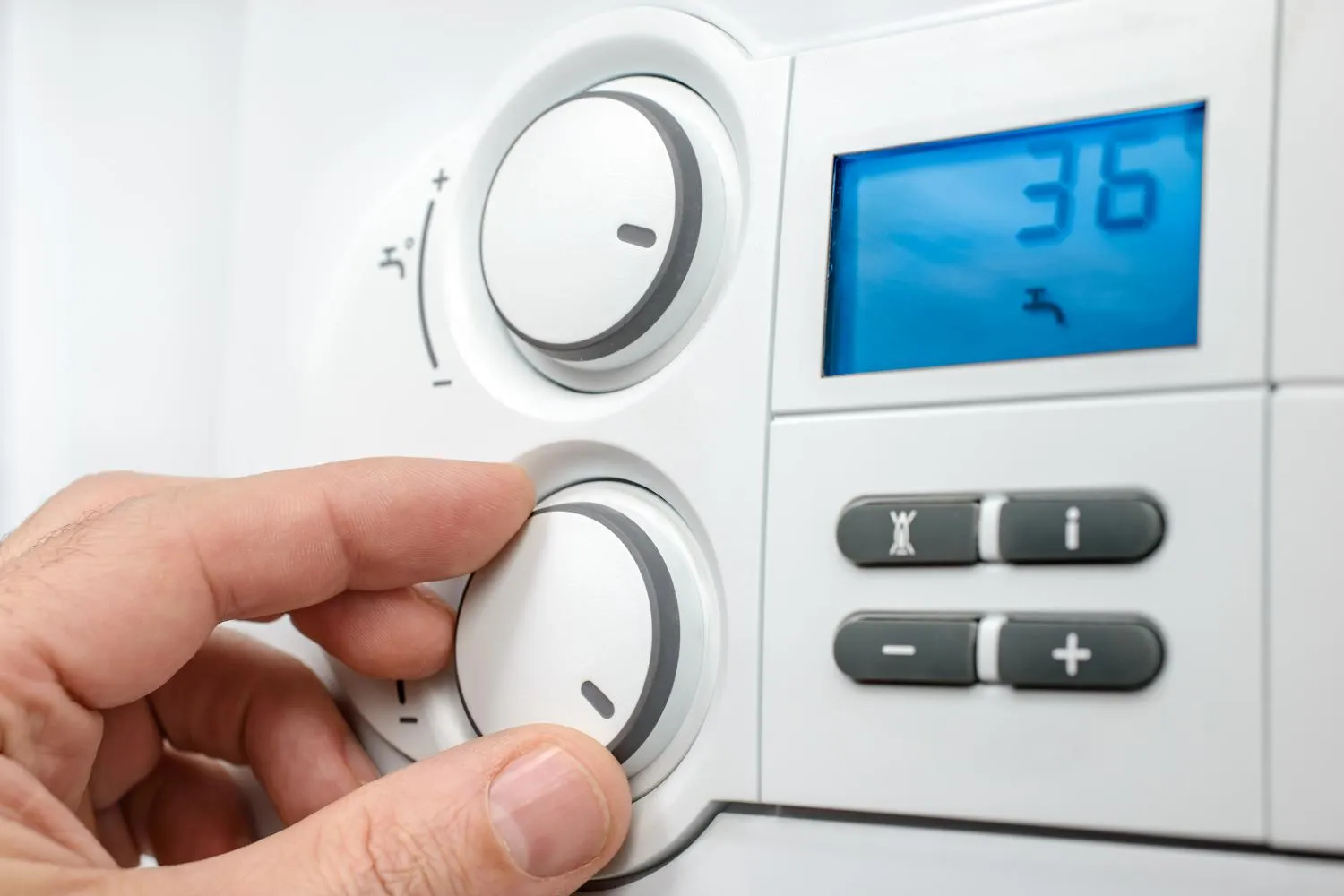
Low boiler pressure means the system has fallen below the recommended range and can stop the boiler from firing, triggering fault codes or lockouts. Normal cold pressure is typically about 1–1.5 bar; keeping pressure in the range ensures correct circulation and protects the expansion vessel and pressure relief valve.
Common causes are small leaks, recent radiator bleeding or failing components. A safe repair routine is to check for visible leaks, then repressurise using the filling loop while watching the gauge for recurring drops. The table below summarises likely causes, how they present and immediate DIY steps to try before calling a professional.
| Cause | Symptom | Immediate DIY Action |
|---|---|---|
| System leak (pipework or radiator) | Visible water, damp patches or pressure slowly falling | Inspect visible pipework and radiators; tighten small fittings and dry up leaks; call an engineer if it keeps happening |
| Recent radiator bleeding | Pressure drops after bleeding radiators | Repressurise via the filling loop to the recommended cold pressure and recheck after 24 hours |
| Faulty pressure relief valve or expansion vessel | Rapid, repeated pressure loss or evidence of discharge | Look for discharge around the PRV; don’t attempt DIY replacement — book a Gas Safe engineer |
This quick triage shows when a professional inspection is needed. If pressure won’t hold after a careful repressurise, stop and have a trained engineer investigate. Neater Heat offers servicing, component inspection and 24/7 call‑outs for pressure faults if you’d rather leave it to the experts.
What Causes Low Boiler Pressure?
Low pressure is usually caused by system leaks, air introduced during radiator bleeding, or component failure, such as a worn expansion vessel or a faulty pressure relief valve. Look for damp patches, pooling, or staining near pipe joints or radiators — these indicate leaks that need sealing or repair.
If pressure falls after maintenance, topping up via the filling loop is a sensible immediate step; ongoing loss suggests a persistent leak or failed component and needs professional attention.
How to Repressurise Your Boiler Safely?
Turn the boiler off and find the filling loop, then follow the manufacturer’s instructions and monitor the pressure gauge while adding water. Open the filling loop valves slowly until the gauge reaches the correct cold pressure, close the valves and remove the loop if it’s removable, then power the boiler back on and check for normal operation and any error codes.
If pressure won’t rise or won’t hold after repressurising, stop and book a qualified engineer to check the PRV and expansion vessel — don’t force the system. If you prefer a pro, Neater Heat heat pumps’s Gas Safe registered engineers can safely repressurise and inspect the system.
How Can I Troubleshoot Radiator Cold Spots?
Cold spots on radiators usually mean trapped air, sludge or an imbalance in flow between radiators. Trapped air gives warm and cold bands and sometimes gurgling noises; sludge and corrosion settle at the bottom and reduce heat transfer; flow imbalance leaves radiators further from the boiler cooler.
Diagnosing the pattern points to the right fix. Simple remedies include bled radiators to remove air, basic balancing by adjusting TRVs or lockshield valves, and arranging a full system flush if sludge is suspected. The table below matches common causes to likely locations and first steps you can try.
| Cold spot cause | Likely location / part affected | Recommended first step |
|---|---|---|
| Trapped air | Top sections or ends of radiators | Bleed the radiator with a key and reset the boiler pressure |
| Sludge/corrosion | Lower panels and the base of radiators | Consider a powerflush or chemical clean by a professional if it keeps recurring |
| Flow imbalance | Radiators furthest from the boiler | Partially close the nearer radiators’ lockshield valves to increase flow to the cold ones |
This helps you decide whether bleeding and balancing will fix the issue or whether a professional flush is needed — sludge usually requires specialist cleaning. If cold spots persist after basic steps, an accredited engineer can powerflush and properly rebalance the system.
Why Do Radiators Develop Cold Spots?
Cold spots happen because air pockets stop warm water from circulating through parts of a radiator, sludge reduces heat transfer at the base, or uneven flow leaves some radiators starved of hot water. Air often causes gurgling and sharp temperature differences, while sludge keeps the lower panel cold despite the pipes being hot.
Flow imbalance is evident when radiators near the boiler are much hotter than those farther away. Identifying the pattern tells you whether to bleed, balance or book a system flush.
What Are the Steps to Bleed and Balance Radiators?
Turn the heating off and let the radiators cool before you start. Use a bleed key and a cloth to release trapped air until the water runs steady, then top up the boiler pressure if needed. To balance, slightly close the thermostatic or lockshield valves on the warmest radiators to redirect flow to cooler ones, making small adjustments while watching overall pressure.
If bleeding doesn’t help, or you suspect sludge, arrange a professional power flush and chemical treatment. Bleeding and balancing are effective first steps; persistent problems should be dealt with by a qualified engineer.
What Is a Frozen Condensate Pipe and How Do I Fix It?

A frozen condensate pipe occurs when the low‑level plastic pipe that drains boiler condensate outside freezes, causing the boiler to lock out because the condensate can’t drain — a common cold‑weather fault. These pipes often run externally and sit low to the ground, where they’re exposed to frost. When blocked, the boiler senses a drainage fault and won’t fire.
Identifying and thawing the pipe safely will usually restore drainage and restart the boiler without opening sealed components. Below are safe thawing methods and precautions to prevent damage to the pipe and hazards.
How to Identify a Frozen Condensate Pipe?
Look for a boiler lockout or a condensate fault code, along with visible frost or ice on the external drain pipe, and no dripping at the condensate discharge.
Check the low‑level external run for ice build‑up and listen for the absence of condensate flow — don’t force open the boiler casing. Confirming the symptom before thawing avoids misdiagnosis and unnecessary internal inspections. Once identified, follow the safe thawing steps below.
What Are the Safe Methods to Thaw a Frozen Condensate Pipe?
Apply gentle external heat only: pour warm (not boiling) water over the frozen section, wrap warm insulating cloths around the pipe, or use a hairdryer on a low setting to melt the ice. Never use open flames, hot metal tools or aggressive heat that could melt or split the plastic. Protect nearby electrical components and wear gloves if needed. After thawing, insulate the pipe and consider rerouting or lagging vulnerable runs to help prevent repeats. If thawing fails or the pipe is damaged, contact a Gas Safe registered engineer.
For persistent problems, Neater Heat can advise on insulation solutions and offer 24/7 call‑out support from accredited engineers.
- Safe thawing methods summary: Warm water — slowly pour warm water over the frozen section while protecting surrounding surfaces. Insulating cloths — wrap heated cloths around the pipe and replace as they cool. Low‑heat blower — use a hairdryer at a low setting, keeping it at a safe distance to gently warm the pipe.
These methods restore drainage without invasive work and, when combined with insulation or minor rerouting, reduce the chance of repeat freezes.
DIY Boiler Checks and When to Contact a Gas Safe Engineer
With a few safe, sensible checks, you can often restore your heating and hot water quickly, saving time and expense. Understanding common causes and using practical fixes lets many homeowners solve problems themselves; for complex faults or emergencies, always call a qualified, Gas Safe-registered engineer.
If you need help, explore our resources or contact Neater Heat for professional support to keep your boiler running reliably.