UK Heat Pump Installation Costs: Commercial & Residential Breakdown
Heat pumps are renewable heating systems that extract ambient heat from air or ground and concentrate it to provide space heating and hot water, offering a low-carbon alternative to traditional boilers. Installation cost varies notably between commercial and residential projects because commercial sites often need larger units, more complex distribution, and bespoke control and plant-room work.
This guide explains typical commercial cost bands, how air source and ground source heat pump pricing differs for businesses, which grants and funding routes may be relevant, and what running and maintenance costs to expect. You will also find practical decision criteria to help a business choose between ASHP and GSHP, plus examples of cost drivers and maintenance checklists. Read on for concise cost tables, lists of the main variables that affect price, and actionable next steps, including how to get a tailored commercial quote.
While this guide primarily focuses on commercial applications, understanding the broader context of residential heat pump adoption and readiness is also crucial for the UK’s decarbonisation goals.
UK Residential Heat Pump Installation & Readiness Costs
1. Heat pumps are a solution for decarbonising home heating in the UK. However, the readiness of UK homes for heat pumps is an area of concern regarding the policies aimed at increasing heat pump adoption. This work combines multiple perspectives in evaluating the technical readiness of homes with the market readiness of installers and homeowners to proceed with installing heat pumps. The effectiveness of past heating and energy efficiency policies in the UK are reviewed, along with building regulations, incentives to promote energy efficiency and the effectiveness of heat pump technology in heating homes. Current policies support the cost of a heat pump but home improvements to make homes ‘heat pump-ready’ can be necessary to achieve optimal heat pump system performance.
Increasing heat pump adoption: analysing multiple perspectives on preparing homes for heat pumps in the UK, D Elmes, 2024
What Are the Typical Costs for Commercial Heat Pump Installations in the UK?
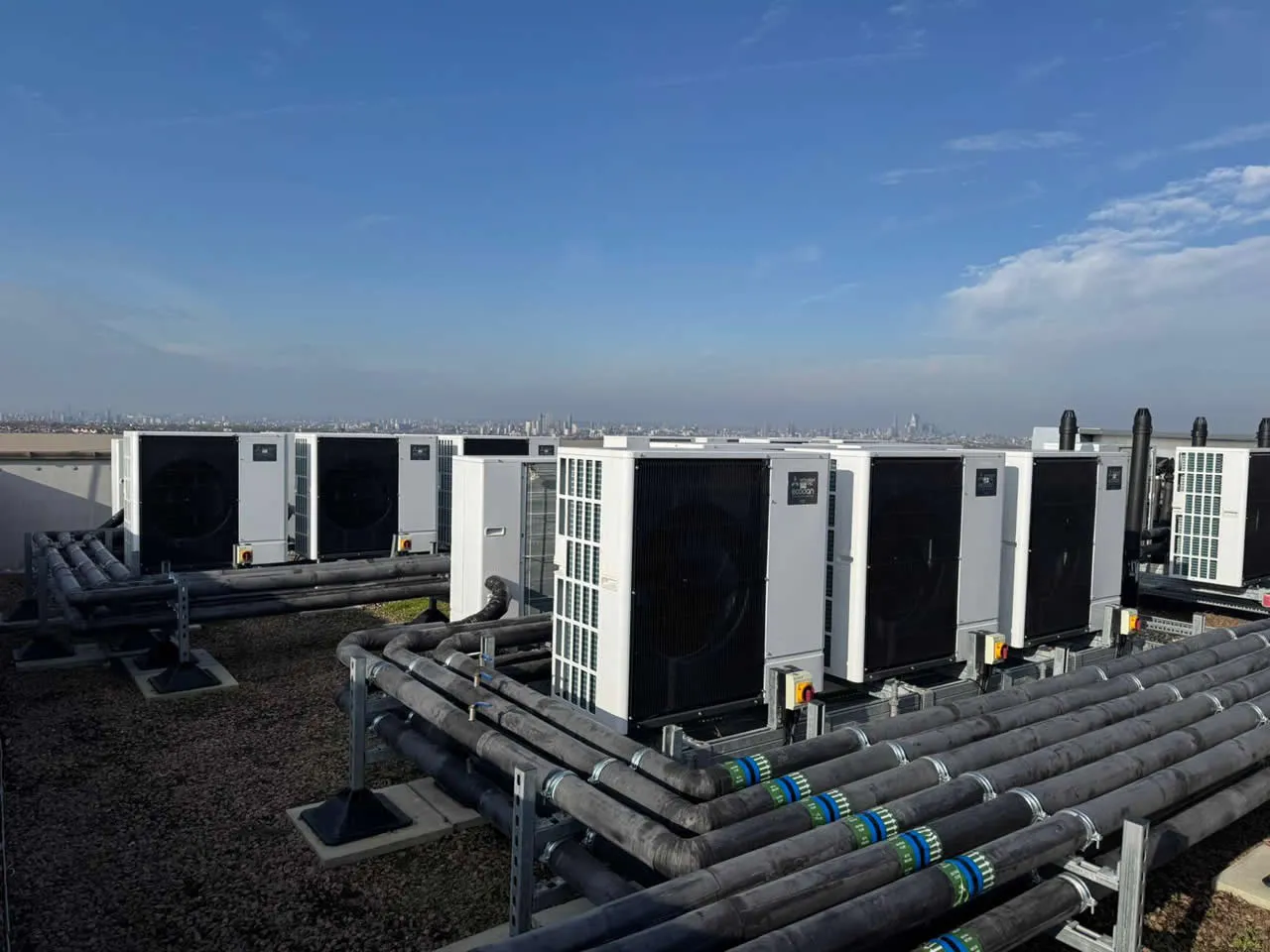
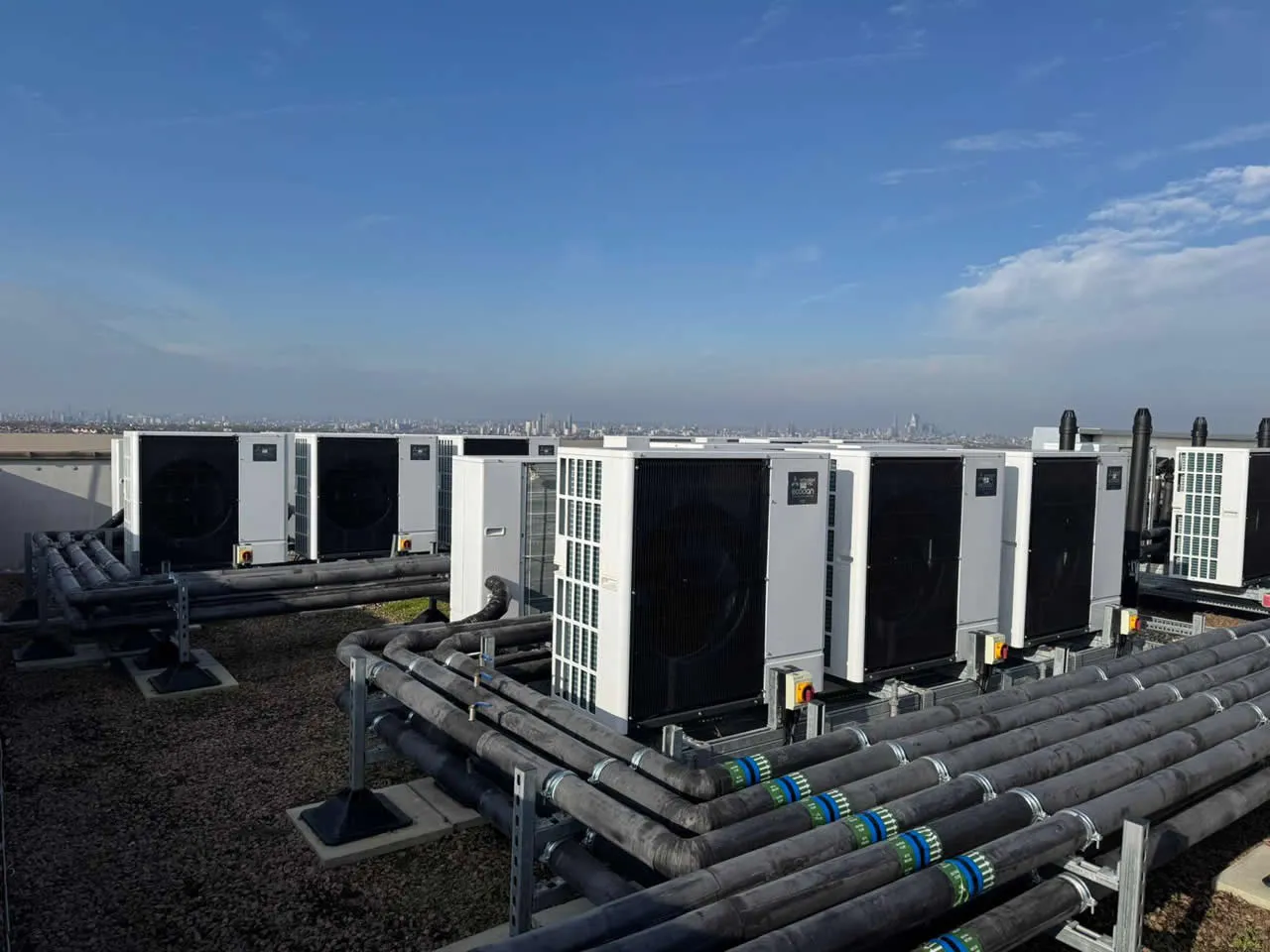
Commercial heat pump installation costs vary widely with system type, building demand, and site works; typical commercial ranges span from lower tens of thousands for modest ASHP installs to well over £50,000 for large GSHP or multi-plant systems.
Costs are driven by unit capacity, distribution upgrades, groundworks or boreholes, and installation labour and commissioning. A formal site survey and heat-loss calculation are essential to produce a business-specific estimate and to size the system correctly. For straightforward procurement and bespoke quotations, businesses should engage an MCS-accredited installer to confirm scope and constraints.
Different commercial use cases illustrate this variation:
| System type | Typical installed cost (commercial) | Primary cost drivers |
|---|---|---|
| Air Source Heat Pump (ASHP) | £7,000 – £35,000 | Unit capacity, pipework, controls, distribution upgrades |
| Ground Source Heat Pump (GSHP) – horizontal | £20,000 – £60,000 | Trenching, land area, ground loop length, labour |
| Ground Source Heat Pump (GSHP) – vertical | £40,000 – £150,000+ | Borehole drilling, geology, rig mobilisation, plant room works |
This table shows the scale of likely expenditure for businesses and highlights which attributes — unit, labour, groundworks and controls — most affect price. The next section breaks down how ASHP costs change with business size and application.
How Do Air Source Heat Pump Installation Costs Vary for Businesses?
Air source heat pump (ASHP) costs for businesses depend on capacity and the complexity of integrating with existing distribution. A small retail unit or office needing a single ASHP module may sit toward the lower end of the commercial ASHP range, while multi-zone offices or light industrial sites require larger modular banks and more control equipment.
Typical commercial ASHP projects include additional costs for buffer tanks, enhanced controls, and possible upgrades to radiators or underfloor distribution to accommodate lower flow temperatures. When planning, factor in plant-room modifications and acoustic considerations for external units, as these can add to both capital and design costs.
What Influences Ground Source Heat Pump Costs for Commercial Properties?
Ground source heat pumps (GSHP) carry higher groundworks costs, and their pricing is heavily site-dependent. Horizontal collector arrays require sufficient land and extensive trenching, making them cheaper when land is available; vertical boreholes suit compact sites but involve drilling rigs and borehole rates that increase costs substantially. Geological conditions, access for plants, and local planning or environmental constraints also influence price.
Businesses with high, continuous heat demand often achieve better long-term ROI with GSHP despite higher upfront costs because of higher seasonal performance and stable output, which offsets the initial capital over time.
How Can UK Businesses Benefit from Heat Pump Grants and Funding?

Businesses can access a mix of national and local funding, but eligibility varies, and some prominent schemes primarily target homeowners.
The Boiler Upgrade Scheme (BUS) has been significant for households, while businesses should explore alternative routes such as local authority grants, industrial decarbonisation funds, and commercial financing or leasing to spread upfront costs. Installers and energy advisers commonly support application paperwork and eligibility checks, which reduces administrative risk and speeds access to available support.
Below is a scannable summary of common funding options and who they typically apply to:
| Scheme or route | Typical eligible systems | Typical support / note |
|---|---|---|
| Boiler Upgrade Scheme (BUS) | ASHP / GSHP (primarily household-focused) | Fixed grant amounts for eligible domestic installs; business eligibility is limited |
| Local authority / regional funds | Varies by programme | May support commercial decarbonisation projects; check local schemes |
| Commercial financing / leasing | All system types | Spreads capital cost; lender criteria vary by project size |
This table clarifies that BUS has been household-focused and that businesses often rely on regional funds or financing. Businesses should request installer support when pursuing grants because accredited installers can advise on current eligibility and required documentation.
Are There Specific Grants Available for Commercial Heat Pump Installations?
Specific commercial grants and funds vary across regions and over time; many programmes are targeted or competitive. Local enterprise or council decarbonisation funds, industry-specific grants and commercial low-interest loans are common routes.
Businesses should check government departmental guidance and local authority offerings and work with an accredited installer or energy consultant to identify suitable schemes and to verify technical eligibility. Early engagement with an installer helps align project scope with grant criteria and accelerates the application process.
How Does the Boiler Upgrade Scheme Affect Heat Pump Costs for Businesses?
The Boiler Upgrade Scheme provides fixed grants for eligible domestic heat pump installations and therefore reduces out-of-pocket costs for homeowners; its direct impact on business project budgets is limited.
However, the existence of BUS can influence supply chain availability and installer resources, indirectly affecting commercial pricing and lead times. Businesses should therefore plan procurement timelines carefully and confirm the current status of any VAT reliefs or grant windows with their installer to understand net capital requirements.
What Are the Running and Maintenance Costs of Heat Pumps in the UK?
Annual running costs for commercial heat pumps depend on system efficiency (COP), duty cycle and electricity pricing; typical ranges for commercial ASHPs and GSHPs differ but both often deliver lower CO2 emissions and competitive operating costs versus electric resistance and, in many cases, fossil fuels.
Routine maintenance and timely refrigerant checks are essential to preserve efficiency and warranty conditions. Life-cycle cost modelling, using a site’s load profile and current electricity tariffs, gives the most reliable projection of annual operating expenses.
Intro to comparative running costs and maintenance table:
| System | Annual running cost (indicative) | Typical annual maintenance |
|---|---|---|
| ASHP (commercial) | £850 – £1,700 | £100 – £300 |
| GSHP (commercial) | £700 – £1,600 | £150 – £400 |
| Gas/oil (commercial) | Varies widely | £200 – £500 |
This table provides a high-level comparison to help businesses estimate operating cost differentials; assumptions include moderate duty cycles and average electricity/gas prices. For precise comparisons, obtain a bespoke calculation from an installer.
How Do Heat Pump Running Costs Compare to Traditional Heating Systems?
Heat pumps deliver heat more efficiently because they move heat rather than generate it; the coefficient of performance (COP) typically exceeds boiler efficiency on a like-for-like basis, which reduces energy consumption per kWh of heat delivered. In practice, the electricity price, COP at design temperature and building insulation determine whether a heat pump will cost less to run than gas or oil. Businesses should model actual consumption patterns and tariff structures to decide; this process is best performed alongside the site survey and system design to estimate payback and ROI.
What Are the Typical Maintenance Expenses for Commercial Heat Pumps?
Commercial heat pump maintenance includes annual system checks, filter changes, refrigerant leak tests, control calibration, and occasional component replacement; accredited servicing helps maintain efficiency and the manufacturer’s warranty.
Typical service intervals are annual for inspections and performance checks, with more frequent filter or exchanger cleaning in dusty or industrial environments. Indicative annual maintenance costs for commercial systems commonly fall in the ranges shown in the previous table, though bespoke service contracts are advisable for larger installations to cover parts and rapid response.
Which Types of Heat Pumps Are Best Suited for UK Businesses?
Choosing between ASHP and GSHP depends on site constraints, heat demand profile, budget and tolerance for disruption; ASHPs usually offer lower upfront cost and faster installation, while GSHPs can deliver higher long-term efficiency where land or borehole access is feasible.
Hybrid systems and air-to-water configurations can meet specialist commercial needs, such as process heating or combined heat and power. A structured decision framework balances capital costs, operating costs, available space, and the business planning horizon to select the optimal approach.
Businesses should evaluate these decision criteria:
- Space availability for external units or ground arrays
- Required heat output and load profile
- Budget for upfront capital versus long-term energy savings
- Acceptable level of installation disruption and planning constraints
These criteria guide whether an ASHP, GSHP or hybrid solution is most appropriate and lead naturally to a detailed site survey and technical design.
What Are the Advantages of Air Source Heat Pumps for Commercial Use?
Air source heat pumps offer lower upfront capital expenditure and simpler installation logistics compared with ground source systems, making them attractive for many commercial buildings with available external space. ASHPs are modular and scalable, which helps match capacity to building zones and reduces lead time.
They are suited to offices, retail units, and light-industrial sites where groundworks are impractical, and they typically require less invasive plant-room modifications than GSHPs. Consideration of noise, external siting and flow-temperature compatibility is nevertheless important during specification.
When Should Businesses Consider Ground Source Heat Pumps?
Ground source heat pumps are compelling where land is available for horizontal collectors or where borehole drilling is practicable; they often deliver higher seasonal performance and stable output that benefits high-demand or continuous-use sites. Businesses with long planning horizons and predictable heating loads often recover higher upfront investments through lower operating costs and longer system lifetimes. Evaluate ground conditions, access for drilling rigs, and potential disruption during groundworks when assessing GSHP feasibility; these factors are critical inputs to the financial case.
For a tailored commercial heat pump assessment and a site-specific quotation, businesses can request a quote from Neater Heat, an MCS-accredited installer and service provider with experience across Hampshire, Surrey, Berkshire and Greater London; installers can advise on eligibility for funding, carry out surveys and produce firm costed proposals.
Conclusion
Investing in heat pump technology offers significant long-term savings and environmental benefits for both commercial and residential properties. Understanding costs, funding options, and maintenance requirements is essential to making informed decisions aligned with the UK’s decarbonisation goals. By exploring tailored solutions and engaging with accredited installers, businesses can optimise their heating systems for efficiency and sustainability.
Take the next step towards a greener future by requesting a personalised quote from a qualified provider today.