When energy bills start climbing, most of us wonder if there’s an alternative. Looking into renewable energy as a heating source has become the go-to for homeowners, not least because we know that gas and electricity from fossil fuels are soon going to be a thing of the past. Transitioning to green technologies like an air source heat pump is often a no-brainer for those seeking cheaper bills and a lower carbon footprint, but are they all they’re cracked up to be?
As with anything, it’s important to take a balanced look before you purchase, so let’s go through the disadvantages of air-source heat pumps.
What Is An Air Source Heat Pump?
Air-source heat pumps are truly a stroke of genius that fits well with the futuristic visions of our childhoods.
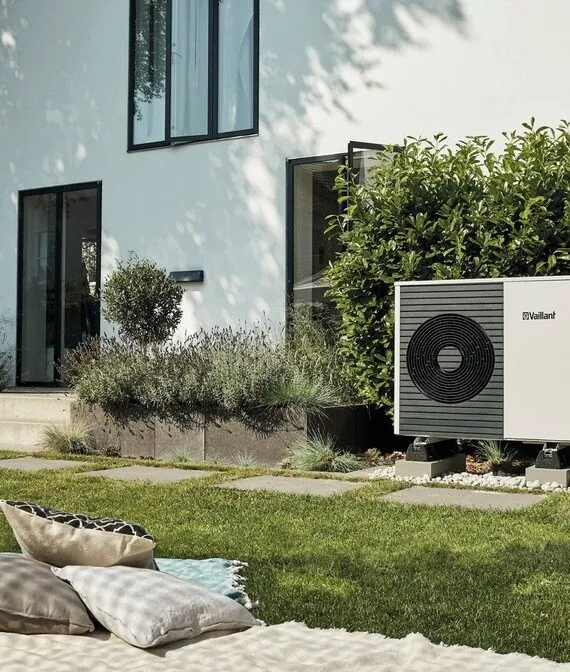
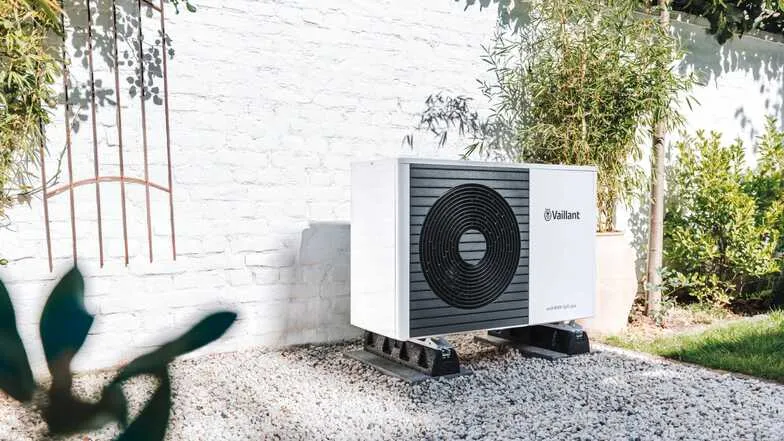
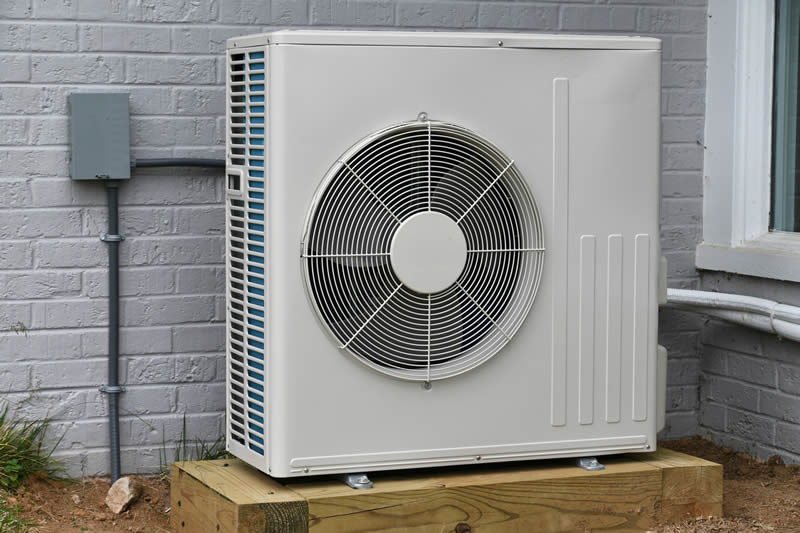
A box not much bigger than a large armchair effectively sits on the side of your property and magically transforms cold outside air to hot water, which fills your radiators and throughout your underfloor heating system.
Able to convert air temperatures as low as minus 20 degrees, they can produce instant hot water for a home or store it for later use. They also work in reverse. Astonishingly, they can even produce cool air akin to an air conditioning unit in the summer months. Some people even rig them up to their swimming pools to heat the water.
Air source heat pumps can be installed in just a couple of days and can go on to last up to 20 years. They require minimum maintenance, needing cleaning every couple of months and a yearly service. Perhaps best of all are the eco-credentials of this impressive kit.
An air-source heat pump can match the full range of a traditional gas boiler, but does so with minimal electricity use and minimal environmental impact. There is no need to store fuel, because it simply doesn’t run on fossil fuels.
In fact, installing an air-source heat pump and powering it with electricity from additional renewable sources, such as solar panels on your roof, can make you completely carbon neutral.
Possibly the most mind-blowing factor about the air source heat pump is that the government will actually pay you back in monthly instalments for up to 7 years as part of an incentives scheme to get the UK onto renewables. But more about that later.
The question is: with credentials like these, why doesn’t every home have an air-source heat pump?
How Do Air Source Heat Pumps Work?
Much as this sounds like something you’d find in a Harry Potter movie, the reality of this air-to-water heating system contains clever technical engineering.
How a heat pump works is the definition of efficiency. There are two key types of heat pumps: ‘Air-to-Water’ and ‘Air-to-Air’.
- A water heat pump uses heat from the air to heat water, which is then circulated through traditional heating systems like radiators and underfloor heating. As underfloor heating runs more efficiently at lower water temperatures than radiators (approx. 45 degrees), air-to-water heat pumps are considered ideal for this purpose.
- An air-to-air system generates warm air, then pumps it through fans that blow it throughout the home.
Air-to-water systems work by drawing air from outside into their bodies. This air is used to heat a liquid refrigerant, similar to the way a fridge works, but in reverse.
The liquid’s temperature is then increased via compression, driven by an internal pump.
The compressed (now heated) liquid releases its stored heat and can be transferred around the home throughout the normal heating systems, such as radiators and underfloor heating.
Finally, any excess heat is used to generate hot water in a cylinder.
A dual option in some air-source heat pump models means they can be used as air conditioners too. Warm summer air can be cooled by absorbing heat from the air, which can then be blown back into the indoor space using a fan system.
Although it is possible to buy separate devices depending on the need, there are also models which do both.
It’s essential to ensure a home is well insulated to get the best from an air source heat pump. This is largely to ensure that any heat is contained within the property and temperatures can remain consistent.
Air Source Heat Pump Sizing
Although it’s entirely possible to get away with just one small air source heat pump for an average 3-bedroom house, sizing an air source heat pump is a job that only a professional renewable energy specialist can do.
A heat loss report is an important part of determining how big you need to go, or even whether one air-source heat pump is enough. In really large houses, it could be that you need the combined efforts of two heat pumps working in cohesion.
Other factors include the type of hot water cylinder you have and the number of radiators. Air-source heat pump efficiency is also influenced by the type and amount of insulation.
Air Source Heat Pump Cost
So the big question. How much does this seemingly perfect product cost?
Well, the good news is that among the available renewable energy heating systems you can install in your home, air-source pumps are the most affordable option.
The other good news is that air source heat pump prices are coming down and are expected to continue to do so. In the meantime, you can get much of the money you put in back by signing up for the Renewable Heat Incentive (RHI).
Notably, you will see a significant reduction in your energy bills – in some cases, as much as 68% – immediately after installation.
Everyone, from homeowners taking the hit of inflation, to businesses that’ve missed vital income, to charities struggling post-pandemic, can reap the rewards. And that’s without mentioning the environment.
Air source heat pump prices can be broken down to:
- The unit and parts
- Installation costs
- Running costs
A good-quality air source heat pump costs on average £4,000-£6,000 (depending on its output range), but air source heat pump installation costs can significantly increase the price. To install, you might expect to pay a further £3,000-£10,000 depending on the complexity of the job, existing infrastructure and the size of the property.
When compared to the average cost of a biomass boiler (£15,000 – £25,000), or a ground source heat pump at £34,000-£40,000, there is a considerable saving.
It’s fair to say that air source heat pump costs are initially high. For many homeowners, it simply isn’t affordable, particularly when compared to a traditional combi gas boiler, which costs around £3,000.
The government seem to recognise this too, which is why they currently provide a £7,500 up-front grant for the installation of a new ASHP system into homes and businesses.
The ‘Future Homes Standard’ details the full intention to move all new build properties away from fossil fuels, addressing a much-needed reduction in carbon emissions for the UK to meet it’s CO2 2050 targets, so with the growth of the industry, it’s fully expected that air source heat pump prices will greatly decrease, along with other renewable technologies.
Air Source Heat Pump Running Cost
When installed properly by experts (like here at Neater Heat), air source heat pumps are definitely cheaper than oil or LPG boilers and offer some of the lowest running costs for home heating.
The Coefficient of Performance (COP) is a measure of the energy output per unit of energy input. When an air-source heat pump uses 1kW of electricity, it has a COP of 3kW. The 3kW is thermal energy (heat).
These ratios change depending on the air temperature and also the temperature of the water that the heat pump is trying to produce. Because it fluctuates throughout the seasons, an average COP is worked out over the course of a year, known as SCOP (Seasonal Coefficient of Performance).
For comparison, a traditional gas boiler SCOP might be 0.8.
Running costs should be reduced by around £200-£300 a year with an air source heat pump, which has an SCOP of 3-5.
So, Are There Any Disadvantages of Air Source Heat Pumps?
Much as air source heat pumps are wonderful, nothing is perfect. As we know, air-source heating systems come in two formats: air-to-water and air-to-air. Both have their disadvantages.
Air to Water and Air to Air – Heat Pump Disadvantages
The Cost:
Unfortunately, the upfront cost is probably the main downside of air-source heat pumps. Most people just don’t have, or feel able to pay, the higher upfront costs.
The cost of air-source heating is largely determined by the installation of an air-source heat pump. Because renewable technology is still a fairly new industry, fewer people know how to do it compared to their fossil fuel alternatives.
However, we would still argue that overall, ASHPs do work out cheaper. The fact is, when you think about how much an air-source heat pump costs in total, you just need to wait a few years to recoup your investment.
The Heat:
A key drawback of air-source heat pumps is that they simply don’t deliver the same level of heat that some homeowners have come to expect. Although this sounds bad, it simply means this is a heating system that is best suited to underfloor heating and radiators.
Because of that, larger radiators are often required, which adds an additional cost at installation that has to be factored in.
Although the overall temperatures are lower, they are consistent. That means that, provided your home is well insulated, you will enjoy warm, comfortable temperatures at all times (rather than the peaks and troughs that traditional gas boilers can incur).
Note: Air-to-air heating system heat pumps cannot be paired with underfloor heating, which might be a priority for maintaining proper temperature.
The Cold Weather Efficiency:
Air-source heat pump problems in cold weather include reduced efficiency and reduced heat output. When temperatures drop below zero, air-source heat pumps have to work harder and aren’t as cost-effective as they are during the summer. Arguably, you could say the same for gas boilers, too! Actually, air-source heat pumps can generate heat from air temperatures as low as -15 Degrees Celsius.
This slow-and-steady approach is more cost-effective than constantly firing up the heating, as we’ve grown used to doing. That said, for homes that are already connected to a main supply of gas for lower prices, you may find it cheaper to remain with that.
The Insulation:
Insulation is helpful with an air-source heat pump, ensuring that every kW of heat generated is used to the maximum. Insulation is an additional cost to factor in if you don’t have enough, regardless of the boiler system.
The Noise:
Another pitfall of the air source heat pump is the perceived noise it makes, which is much like an air conditioning unit. Most people find that by placing the ASHP far from quiet areas of the house (such as bedrooms), it simply doesn’t bother them, but if you’re noise-sensitive, it may be an annoyance. Luckily, manufacturers are getting better all the time, so newer models are quieter than ever, some making almost no noise at all. A noisy ASHP in your home is a thing of the past.
The Electricity:
Because the pumps require some electricity to run, you can’t go completely off-grid (unless you generate electricity from another renewable energy source, such as solar PV).
You can, of course, opt to get your electricity from the many energy providers that give 100% renewable electricity to customers
The Regulations:
A fly in the ointment for some is the need to meet regulations when installing an ASHP. Although the vast majority of people don’t need planning permission, there are a couple of requirements that must be met for the ASHP install to be accepted by the local council.
This includes ensuring the installation is at least 1 meter from the boundary of your home, installed on a suitable surface, such as the ground or a flat roof (1 meter from the edge), and has a maximum volume of 0.6 cubic meters.
The Appearance:
The final disadvantage (if it can be considered one) is the appearance of the air-source heat pump, which often resembles an air conditioner.
Most people are used to seeing their heating systems tucked away in a cupboard rather than on the outside of their house. That said, if they are found to be truly unappealing, it is possible to box them in with a bespoke container case or even some tasteful fencing or hide them behind a few bushes!
Air Source Vs Ground Source Heat Pump
Despite their similar names, air-source and ground-source heat pumps are quite different. We have a comprehensive guide to the pros and cons of an air-source heat pump versus a ground-source heat pump, which you can find here.
Best Air Source Heat Pump
When it comes to air-source heating systems, Neater Heat has extensive experience with a wide range of major brands.
When it comes to the best air-source heat pumps, it really depends on your property’s specific needs. The thorough survey conducted by Neater Heat specialists, including a full heat-loss survey, establishes which domestic heat pumps are the right ones.
That said, as a rule of thumb, we tend to prefer brands that specialise in heat pump systems rather than companies whose main interest is manufacturing electrical items for shipment around the world. This is because, should anything go wrong, we are only a phone call away from a specialist heat pump manufacturer’s technician, rather than a company in another country. For instance, Vaillant air source heat pumps are made in the UK and are the only company that makes heating systems. The Vaillant air source heat pump reviews are excellent, too.
Our air-source heating system brands include Mitsubishi, Daikin, and others.
Air Source Heat Pump Installation
Air-source heat pumps can be installed in 2-4 days. They should always be installed by a fully qualified MCS-certified technician. By choosing a verified RECC or HIES-registered company like Neater Heat, you can be fully assured that the installation will be safe, fully functional, and as efficient as possible.
Summary
We’re sure you’ll agree that, overall, the benefits of an air-source heat pump well outweigh any negatives. Low-cost heat and hot water are environmentally sustainable and highly energy-efficient.
By taking advantage of the Boiler Upgrade Scheme, you will ultimately cover the cost of the initial installation.
For a full no-obligation heat pump quote or any other help with your property’s heating system, why not give our expert team a call today?
Our passion is to deliver the optimum customer experience at the very best price and value.
Call us today on 01252 338078 or use our contact form to get in touch.