Now that the world has been well and truly informed about the potentially catastrophic threat of climate change, it’s becoming quite the norm to think about every aspect of what is contributing to the problem. Housing accounts for 40% of UK emissions, and the average house emits 50 tonnes of CO2 during construction. It’s no wonder developers are turning to eco-technologies for house builds, as they look forward to a more environmentally friendly, low-carbon future.
The document L legislation requires that new build homes meet certain criteria, such as boiler performance, insulation, water storage, and modern lighting. However, some homes are going the extra mile, well beyond just being energy-efficient.
Let’s take a look at the housing projects across the UK that demonstrate exactly how net-zero homes can be achieved.
What It Takes To Build An Eco Home
Essentially, an eco home is about emitting as little carbon as possible into the atmosphere. That includes sourcing materials, the build itself, and the way heat and electricity is generated.
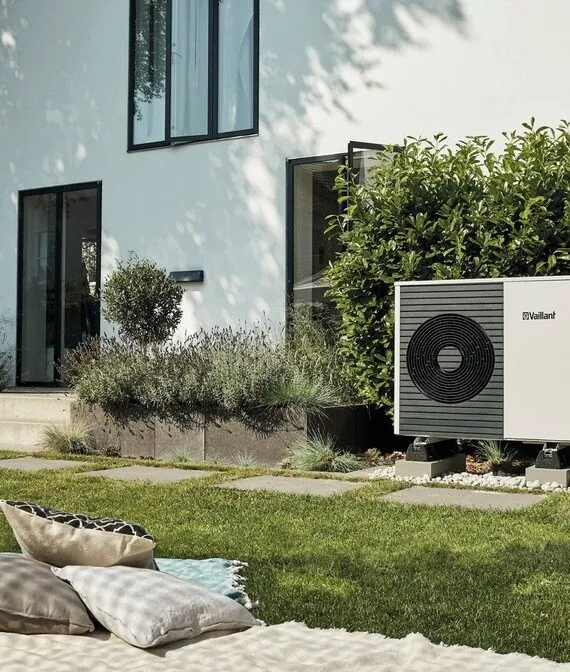
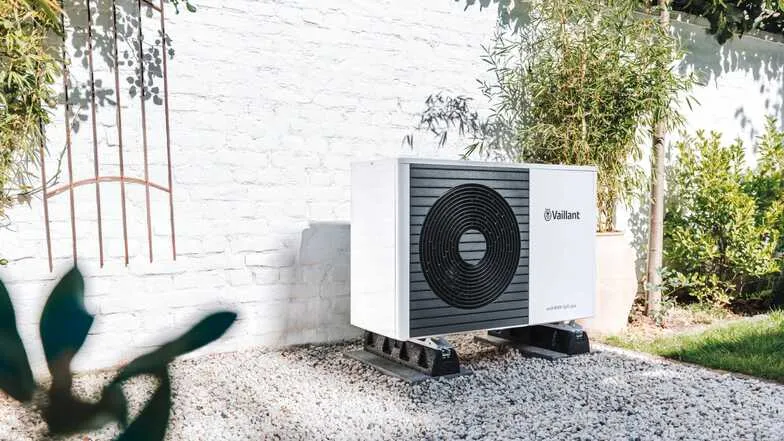
When developers build eco homes, they’re going fully renewable, using all the available technologies such as air source heat pump, solar panels and ground source heat pumps.
An eco house might well use locally sourced, sustainable timber for its framework and water-saving appliances and systems designed to completely remove waste.
It’s the kind of utopian grand design that any passionate eco-warrior would delight in.
However, building homes this way is currently much harder and more expensive than the ‘traditional’ way.
On the other hand, using reclaimed materials increases the sale price due to the eco appeal to buyers, along with ultimate savings on water and energy bills. In the long term, a ‘greenhouse’ might well be the cheaper option overall.
The 5 Eco Housing Projects Leading The Way In The UK
An eco home project in the 2020’s is almost always about specifically planning it before construction even begins.
As the following top five examples of UK zero-carbon homes show, not only can it be achieved by 2030, but it can be done stylishly and ethically too.
From clean ways to source heat, to eco insulation materials, to reconditioned timber and a new kid on the block, ‘ hempcrete’, it’s not hard to see the appeal.
1. The Wintles, Bishops Castle, Shropshire
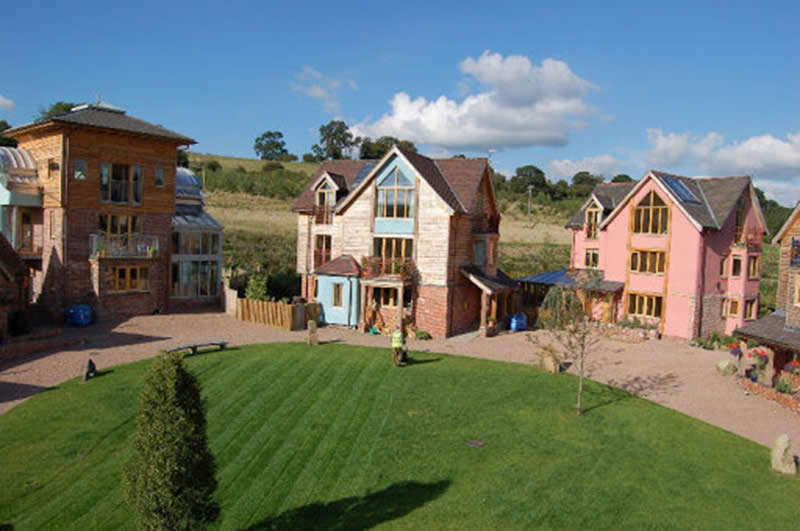
Consisting of 12 eco homes of varying sizes surrounding the village green central hub. Creator Bob Tomlinson was driven by a desire to see a community thrive within a low-carbon environment, connecting with and engaging with each other as much as with the natural setting.
Providing homes in communities where people truly immerse themselves means they’re likely to nurture relationships, buy locally, and stay longer.
With 12 acres of shared woodlands and allotments, the community can even produce its own food.
With these levels of contentment, there’s less reason to move on, which in turn means fewer refurbishments and less constant redecoration to suit taste, as homeowners typically do if they move house.
Largely made from timber, the eco-development has an authenticity and charm little seen elsewhere.
This was to focus on reducing the planet-harming concrete that homes over 80% of the global population and accounts for 5% of carbon emissions.
Instead, the wood-framed homes are insulated with Warmcel recycled paper and have large windows placed on the southern sides to harness as much solar power as possible.
Solar panels and wood-burning stoves provide the energy needed to light and heat the houses, and water comes from rain harvesting.
Tomlinson’s ethos for what he’s dubbed ‘Living villages’ has some simple and pretty sensible rules:
- No more than 12 households within any eco-community to harbour close neighbourly relationships
- Homes should be placed in a circular fashion to create a sense of belonging and community
- No more than 70 households in any wider township neighbourhood
- Houses should be different to accommodate the different needs of those living in them
- No cars allowed within the front door vicinity of the development
- Housing projects should be set alongside woodland, orchards and allotments
- Homes designed with renewable energy to be ultra-efficient, made with local sustainable materials
2. BedZED, South London
BEDZed is the UK’s first urban eco-village to be built on a larger scale, back in 2002.
Based in South London, the development includes 100 homes, offices, a college and community facilities. Offering plenty of green space, the sustainable build was designed to appeal to those looking for a less impactful lifestyle.
With every effort to keep clean and green, the project was eventually awarded the Housing Design Award for Sustainability from the Royal Institute of British Architects.
Developers Bioregional continue to invest in their zero-carbon philosophy, ‘one planet living’, which has become the blueprint for their worldwide property projects.
And considering that their eco house sales average up to 10% higher than local competition, it’s clear there is demand for sustainable eco homes with the added appeal of low-cost energy bills for life.
The Bioregional blueprint criteria for eco house construction include:
- Locally sourced materials, at least half come from within a 35 mile radius of site
- Using reclaimed products such as steel – up to 15% of the total build equating to 3,400 tonnes
- Unused land allocation, such as brown belt which had previously been discarded
- Biomass boilers as standard
- Solar panels as standard
- Energy-efficient lighting
- Well insulated with roof cowls to circulate fresh air
- On-site ‘car club’ for residents to car share, alongside car-free streets, for community socialising and children can play freely
- Blended social and private housing with varying shapes and sizes to cater for all needs
- Private and shared outdoor living green space in abundance
- Water saving appliances such as dual flush toilets, aerated flow taps, shower heads and water-efficient washing machines, ensuring a reduction of up to 40% less water waste
- Annual combined savings of £1391 per year per household due to the on-site car club, reduced energy and water bills
3. TY Eco Homes, Pembrokeshire
Located only a few miles from the Cardigan Bay beaches, the TY Solar Boncath Garden Village in Pembrokeshire save an impressive 70,000 tons of CO2.
The beautifully presented Scandinavian-style properties are powered by solar energy, with 15kW PV-integrated roof systems and a 13.8 kWh Tesla Powerwall battery for storage.
With local Douglas Fir tree cladding and Warmcel recycled paper insulation, the south-facing houses follow the principles of passive solar design to provide year-round natural light and space heating.
Each spacious home provides EV charging for electric cars and features a low-carbon Swedish paint system that helps asthma sufferers.
4. East Village, London
Back in 2012, the East Village in London was specifically created as the Olympic Village for the Summer Games.
Since then, it’s been converted into 2,818 urban residential units, achieving level 4 in the Code for Sustainable Homes, which is considered an eco success.
An onsite biomass power station creates the energy source for the entire community with 90% efficient heating systems and 90% construction waste is saved from landfill.
Through LED lighting, the East Village has reduced carbon emissions by 5k tons, and the presence of living roof gardens helps replenish and nurture local wildlife.
East Village London is home to 6,000 people and features on-site restaurants, shops, and bars, along with 35 acres of open land and 3 children’s parks.
Since the project has been such a success, developers plan to add a further 2,000 homes with the same eco credentials.
5. Primrose Hill Passivhaus, Plymouth
Passivhaus buildings are a German concept that specifically design homes with very little need for energy to heat or cool.
Because the building is so highly insulated and has zero heat loss, occupants can enjoy air-heat generated by themselves, the sun, and household appliances.
Modelling using the Passive House Planning Package (PHPP) is extremely accurate and achieves a 75% reduction in the need to heat the home. In turn, the Passivhaus standard means an 80% reduction in carbon emissions.
A new development of shared ownership and affordable rented homes in Whitleigh Plymouth, is the largest Passivhaus development in the UK. The homes are highly energy efficient and air tight, with triple glazed windows and doors, meaning the house has a small gas boiler and just two radiators in total.
Completed in June 2019, the 72 new homes were built to high standards required by the Passivhaus standard, and the development received Passivhaus certification on completion.
Plymouth city council incentivised housing developers by offering the site for just £1, which was taken up by Plymouth Community Homes, who then consulted with Passivhaus experts.
A former school, the project was fraught with challenges and took 5 years to complete. But the end result was worth it, with 72 highly efficient, low-carbon properties for local families to thrive in.
The project was deemed so successful that it was shortlisted for the ‘Inside Housing Development Awards’.
Want To Go Eco And Green Up Your Own Home?
Of course, most of us aren’t in a position to live in an eco house just yet, but we can adapt our existing homes.
If you have a new home, you might already have renewable energy installed, but for older properties, some tweaks can still be made.
The Boiler Upgrade Scheme grant lets homeowners install renewable energy technology with a £7,500 up-front discount.
Of course, you’ll also benefit from the significant savings on energy bills – up to 68% – as well.